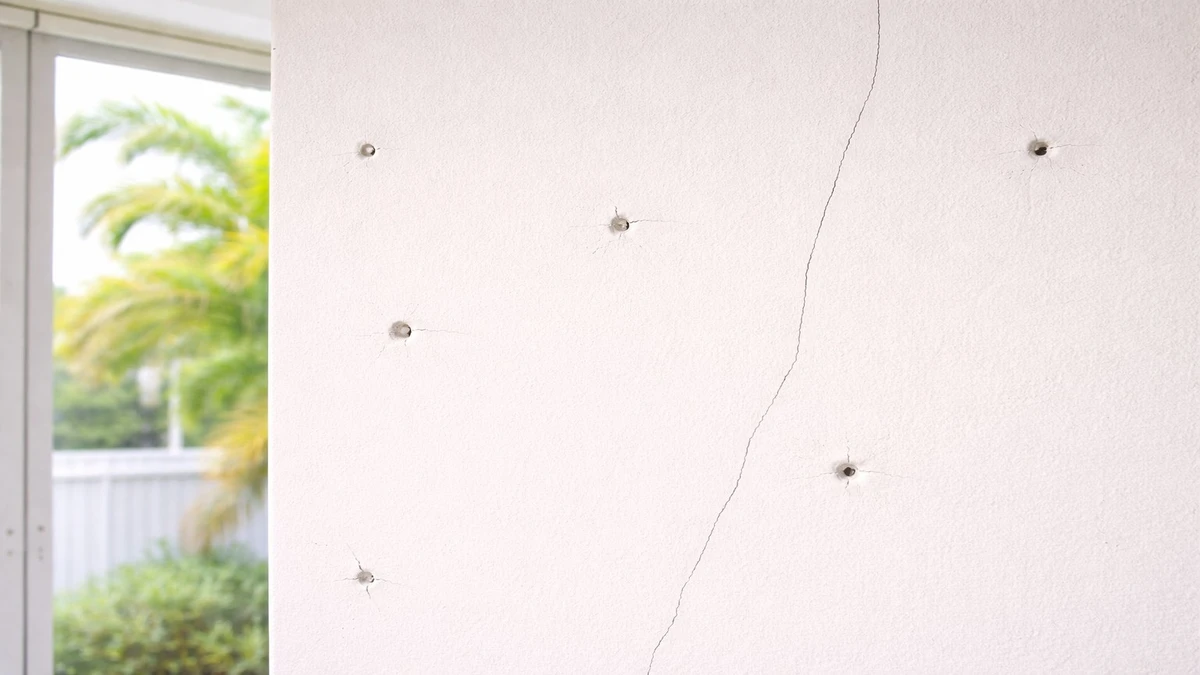
If you've lived in a South Florida home for any length of time, you've probably noticed it — a small circular bump pushing through the paint, a hairline crack running along a corner, a soft spot on a ceiling that wasn't there before. Drywall issues are extremely common in this part of the country, and most of them have straightforward explanations rooted in the local climate and how homes are built here.
Understanding what you're looking at makes it easier to know when to call someone, what to expect when you do, and why these problems keep coming back if the underlying causes aren't addressed.
Why Drywall Problems Are Common in South Florida
South Florida's combination of heat, humidity, and seasonal weather creates conditions that are hard on interior wall surfaces. The issues you're most likely to see fall into a few distinct categories.
Nail pops
These are the small circular bumps or indentations that appear on painted walls and ceilings. They happen when the drywall screws or nails that hold the drywall to the framing work loose over time. In South Florida, thermal movement is a major contributor — the cycle of hot days, cooler nights, and the transition between dry and wet seasons causes framing lumber to expand and contract repeatedly. Over years, this movement loosens fasteners and pushes them through the surface of the drywall.
Nail pops are purely cosmetic in most cases. The repair involves setting the fastener back properly, applying joint compound over it, feathering it smooth, and repainting. Done correctly, the repair is invisible. Done quickly — just spackled over without resetting the fastener — it will come back.
Hairline cracks
Thin cracks along corners, seams, or in the field of a wall are also largely the result of thermal and moisture movement. As framing moves seasonally, the drywall at joints and seams is under stress. The tape that covers those joints can separate over time, and the joint compound can crack.
Most hairline cracks in South Florida homes are cosmetic, not structural. The exception is cracks that run diagonally from the corners of windows or doors, which can indicate settling or movement in the foundation — those warrant a closer look before simply patching them.
Water damage
This is the most serious category of drywall damage in South Florida. Whether from a roof leak, a plumbing failure, an air conditioning condensate line backup, or storm water intrusion, moisture in a wall or ceiling can saturate drywall, cause it to sag or deteriorate, and create conditions for mold growth inside the wall cavity.
Water-damaged drywall is not just a cosmetic problem. Painting over it without addressing the moisture source and properly drying and replacing the affected material leads to ongoing problems — bubbling paint, recurring staining, and mold that continues to grow behind the surface.
Important: If you have a water stain on your ceiling or wall, confirm the moisture source has been resolved before any repair or painting work begins. Painting over an active or recently wet area without proper drying time is one of the most common reasons paint jobs fail prematurely.
Holes and impact damage
Small holes from doorknob impacts, anchors that pulled through, or accidental damage are straightforward repairs. Larger holes — anything bigger than a few inches — require a patch rather than just filler, using either a mesh patch system or a cut-in piece of drywall depending on the size.
What Professional Drywall Repair Actually Involves
The quality difference between a good drywall repair and a poor one comes down almost entirely to the finishing process. Anyone can fill a hole. Making the repair disappear once it's painted is the skill.
A proper repair involves several stages. The damaged area is prepared — fasteners reset, loose tape removed, edges cleaned up. Compound is applied in multiple thin coats rather than one thick coat, with drying time between each. Each coat is feathered out wider than the last so the repair blends gradually into the surrounding surface. The final coat is sanded smooth before priming and painting.
Skipping steps — applying paint over a single thick coat of compound, not priming before painting, not feathering the edges — produces repairs that are visible as bumps or depressions once the paint is dry. You can see them from across the room in raking light.
When to Address Drywall Before Painting
If you're planning an interior paint project, drywall repair should always come first. Paint does not hide surface imperfections — it reveals them. Any nail pops, cracks, holes, or uneven texture will be more visible after painting than before, especially with flat or matte finishes and in rooms with natural light from the side.
We assess the condition of all wall and ceiling surfaces during our estimates and include necessary drywall repair as part of the scope before any paint goes on. The goal is walls that look correct when the job is done, not walls where you can still tell a repair was made.
If you're not sure yet whether your home needs a full repaint or just a cleaning and some touch-up work, see our post on how to tell if your home needs repainting or just cleaning — it covers the signs that indicate paint has actually reached end of life versus surface grime that can be washed away.
Drywall Repair Across Palm Beach County
We handle drywall repair throughout our service area — Boca Raton, Boynton Beach, Delray Beach, Wellington, and West Palm Beach. If you're also thinking about the full scope of an upcoming paint project, our post on what affects exterior painting cost in Palm Beach County covers what goes into a realistic estimate. Whether it's nail pops throughout a home that hasn't been painted in years, water damage from a ceiling leak that's been addressed, or larger repairs from impact damage or remodeling work, we assess what's needed during the estimate and give you a clear picture of the scope before any work begins.
If you have walls or ceilings that need attention before your next paint project — or just repairs you've been putting off — reach out for a free estimate. Marc or Joe will come out, take a look, and give you an honest assessment of what's involved.
Related Reading
If you are dealing with damaged walls in Palm Beach County, our drywall repair in Boca Raton page covers the service in more detail, and our Drywall Repair Boca Raton guide explains what homeowners should expect before painting.