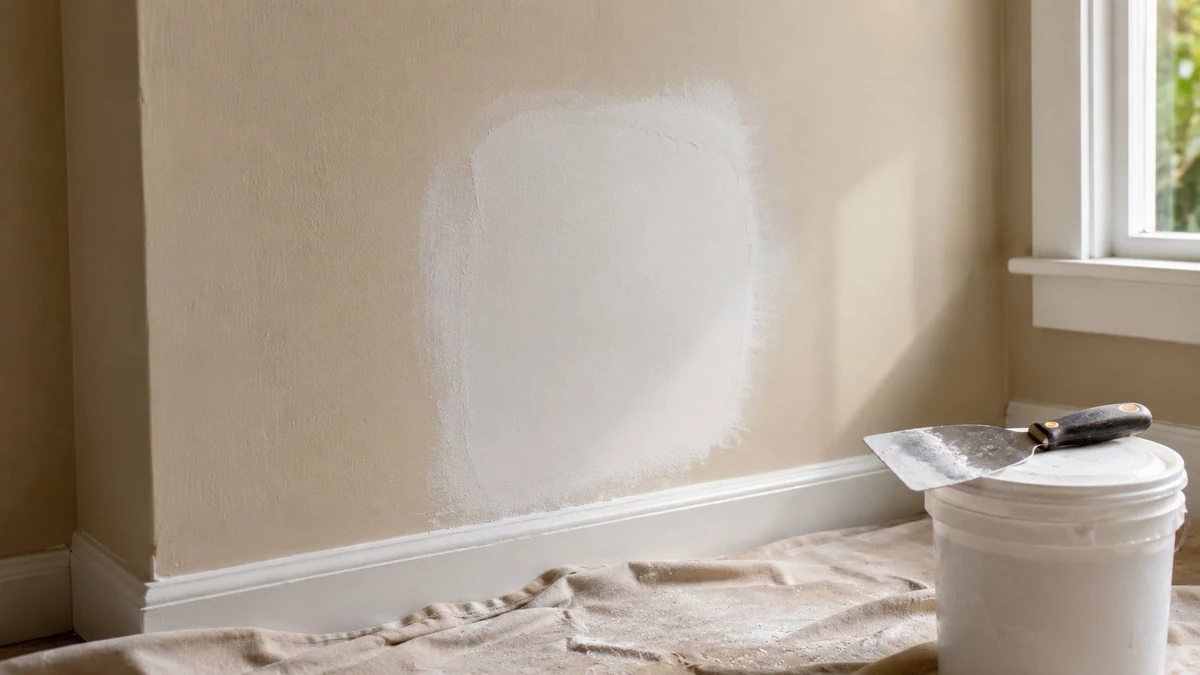
Why Palm Beach County Homes Get Drywall Damage
Every home settles over time. In Palm Beach County, the combination of sandy soil, concrete block construction, high humidity, and seasonal temperature swings creates conditions that produce drywall damage faster than in drier, more stable climates.
Settling and structural movement. Palm Beach County homes are built on sandy substrate. As the soil shifts and compacts, the concrete block walls move slightly. This movement transfers to the drywall and shows up as hairline cracks, especially at corners, above door frames, and where walls meet ceilings. These cracks are almost always cosmetic, but they are visible and need to be addressed before painting.
Humidity cycling. South Florida's humidity swings between wet season (June through October) and dry season (November through April) cause drywall to expand and contract repeatedly. Over years, this cycling loosens drywall screws and nails, producing nail pops that push through the paint surface.
Water intrusion. Roof leaks, plumbing failures, and moisture penetrating through exterior stucco all cause water damage to interior drywall. Water-damaged drywall shows as brown staining, bubbling paint, soft spots, and in severe cases, visible mold growth. Water damage must be sourced and stopped before repair, or the damage will return.
Impact damage. Holes from doorknobs, furniture, accidents, and normal wear are straightforward repairs but need proper patching, not just spackle and paint.
Cosmetic vs Structural: How to Tell the Difference
Most drywall damage in Palm Beach County homes is cosmetic. Nail pops, hairline cracks, small holes, and minor settling cracks are all repairable without concern. However, some signs indicate deeper issues:
Cracks wider than a quarter inch or cracks that grow over time may indicate ongoing structural movement that needs assessment beyond drywall repair.
Soft or spongy drywall around the damaged area means moisture has saturated the gypsum core. The damaged section needs to be cut out and replaced, not just patched over.
Mold behind the drywall indicates a moisture source that must be resolved before any repair work. Painting or patching over mold is not a repair; it is concealment.
Recurring cracks in the same location after previous repairs suggest the underlying cause (settling, movement, moisture) has not been addressed. The repair needs to be done differently or the root cause needs to be fixed first.
A professional painting contractor assesses drywall condition during the estimate walk-through. Cosmetic damage is included in the painting scope as standard prep. Structural or moisture-related issues are flagged so the homeowner can address them before painting begins.
What Professional Drywall Repair Looks Like
Professional drywall repair before painting follows a specific sequence that ensures a smooth, invisible result once the paint goes on.
Nail pops are reset by driving the nail or screw below the surface, then covering with spackle compound. Two to three thin coats, sanded smooth between each, produce a surface that is flush with the surrounding wall.
Hairline cracks are opened slightly, filled with flexible patching compound, taped if necessary, and sanded smooth. The key word is flexible. A rigid patch on a crack caused by movement will crack again. The right compound allows for slight movement without re-cracking.
Holes up to about 6 inches can be patched with a self-adhesive mesh patch and multiple coats of compound. Larger holes require cutting the damaged section out, installing a new piece of drywall, taping the seams, and finishing with compound. The patch should be indistinguishable from the surrounding wall once painted.
Water damage requires removing all affected drywall (not just the stained area, but any section that feels soft), ensuring the cavity behind is dry and mold-free, installing new drywall, and finishing to match the existing wall texture.
Every repaired area is primed before painting. Primer seals the patching compound and provides a consistent surface for the finish coat. Without primer, repaired areas absorb paint differently than the surrounding wall and show as visible marks called "flashing."
For a Boca Raton-specific look at drywall repair, see our drywall repair in Boca Raton guide. For more on our drywall repair services, visit the drywall repair service page.
When to Repair Before Painting
The short answer is always. Every drywall imperfection that is visible before painting will be visible after painting. Paint does not hide damage; it highlights it. A smooth wall with a fresh coat of paint makes every bump, crack, and pop more noticeable because the even color draws the eye to surface irregularities.
A professional painter includes drywall assessment as part of every interior estimate. The estimate should specify what repairs are included in the scope and what, if anything, falls outside normal painting prep (like replacing large sections of water-damaged drywall). There should be no surprises on the day the crew arrives.
For information on what interior painting costs in this market, including repair work, see our interior painting cost guide for Palm Beach County.