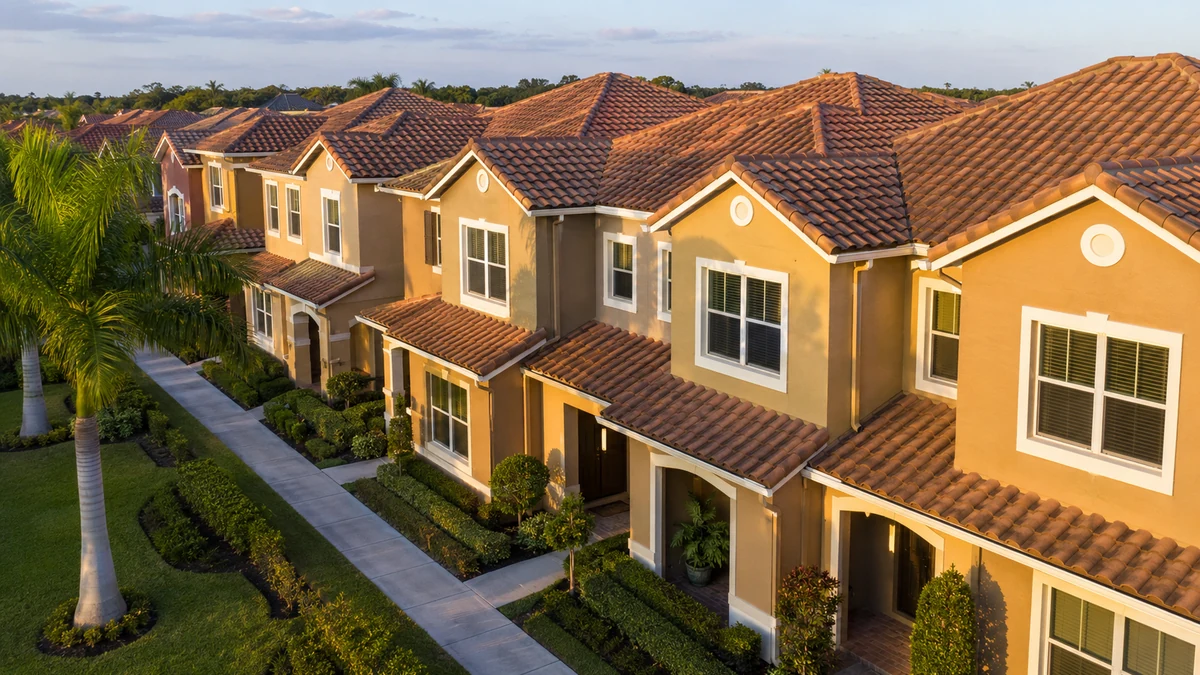
Why HOA Painting Projects Are Different
Painting a single-family home is a straightforward transaction between one homeowner and one contractor. Painting an HOA community is an institutional decision that affects dozens or hundreds of homeowners, requires board approval and often a vote, involves reserve fund management, and needs to be scheduled around residents who are living in the units throughout the project.
Palm Beach County has one of the highest concentrations of HOA communities in Florida. From single-story villa communities in Boynton Beach to multi-building townhome complexes in Wellington to high-rise condos in Boca Raton, the variety of HOA painting projects here is wide. But the common thread is that the board is making a decision on behalf of the community, with community money, and the consequences of getting it wrong are visible to every homeowner every day they drive into the neighborhood.
A faded, peeling community exterior tells potential buyers and current residents that the board is not investing in the property. A well-maintained, recently painted community does the opposite. Exterior paint is the single most visible indicator of how well an HOA is managed.
When to Start Planning
Most HOA communities in Palm Beach County need exterior repainting every 7 to 10 years. Coastal communities and buildings with heavy sun exposure on south and west-facing walls fall on the shorter end. Communities with well-maintained stucco and premium coatings from the previous cycle can sometimes push past 10 years.
The mistake most boards make is starting the process too late. By the time peeling, fading, and staining are visible to residents, the stucco underneath has often been absorbing moisture for months or years, which means the scope of prep work and repair is larger than it would have been if the project started a year earlier.
The ideal timeline: Start getting estimates 12 to 18 months before you expect to begin work. This gives the board time to collect multiple bids, evaluate contractors, present the project to the community, budget properly through reserves, and schedule the work during the optimal dry season (November through April in Palm Beach County).
What the Project Actually Involves
A community-wide exterior painting project is not just rolling paint on walls. On a typical Palm Beach County HOA community, the scope includes:
Pressure washing. Every exterior surface on every building needs to be cleaned before paint goes on. Mildew, dirt, oxidized paint, and salt residue prevent adhesion. On a multi-building community, pressure washing alone can take several days.
Stucco repair. Hairline cracks, spalling, and areas where stucco has separated from the substrate are common on South Florida stucco that has been exposed to the elements for 7 to 10 years. Every crack is repaired and smoothed before painting.
Caulking and sealing. Every window-to-stucco joint, door frame, roofline transition, and utility penetration on every building needs to be caulked. These are the primary entry points for water, and water behind stucco causes the bubbling, peeling, and mold growth that makes a community look neglected.
Coating application. Two coats of premium exterior coating on all surfaces. For communities with existing cracking or moisture issues, elastomeric coatings provide superior waterproofing and crack-bridging capability. For communities in good condition, 100% acrylic exterior coatings with UV resistance and mildew inhibitors are the standard. Our post on waterproofing South Florida homes and buildings covers the difference between these coatings in detail.
Detail work. Fascia, soffits, trim, railings, front doors (if included in scope), garage doors, and any architectural features unique to the community. This is where the quality gap between contractors is most visible.
How to Evaluate a Painting Contractor for HOA Work
The contractor selection is the most consequential decision the board will make on this project. A few filters that matter specifically for HOA community work:
- Fully insured. General liability and workers compensation. Not negotiable. Ask for certificates and verify them. On a multi-building exterior project with ladders, lifts, and pressure washing equipment, the liability exposure is real.
- HOA experience. Ask specifically whether the contractor has painted HOA communities before. Ask for references from other boards and property managers. A contractor who has only done single-family residential will underestimate the coordination required.
- In-person estimates. The contractor should walk every building with the board representative, not quote from aerial photos or square footage alone. Stucco condition varies building to building within the same community.
- Phasing capability. Can the contractor phase the work across multiple buildings or sections? Phasing reduces disruption to residents and allows the board to evaluate work quality before committing to the entire community.
- Communication plan. How will the contractor communicate with residents about scheduling, access, and disruption? A contractor who dumps this responsibility on the board is adding work, not reducing it.
- Owner involvement. Is the company owner directly involved in estimating and overseeing the work, or does a salesperson quote and a subcontracted crew show up? On a project that affects an entire community, the answer matters.
Budgeting and Reserves
Community painting is typically funded through reserves, not special assessments. The reserve study should include exterior painting as a line item with estimated costs and a projected timeline. Boards that fund reserves properly avoid the unpleasant conversation of levying a special assessment when the buildings need paint.
Costs vary significantly based on the number of buildings, total square footage, number of stories, stucco condition, and product selection. The only honest way to get an accurate budget number is an in-person estimate from a qualified contractor who walks every building.
A note on lowest-bid selection: Boards understandably want to be responsible with community funds. But the lowest bid on a community painting project almost always means less prep, cheaper products, or a scope that excludes items you will need. The board that selects the lowest bid often pays twice: once for the cheap job and again two to three years later when it fails. Evaluate bids on scope completeness and contractor quality, not price alone.
Resident Communication
The most common source of resident complaints during an HOA painting project is not the work itself. It is lack of communication. Residents who know what is happening, when, and what they need to do are cooperative. Residents who are surprised by crews showing up outside their window at 7:30 AM are not.
The board should communicate at minimum: the project timeline, what residents need to do to prepare (move patio furniture, potted plants, and cars away from buildings), expected noise and access impacts, and a point of contact for questions. Written notice at least 2 to 4 weeks before work begins is standard.
A good painting contractor will support this process. The best ones introduce themselves to residents when working near their units and treat the communication as part of the job, not the board's problem.
For more on how we work with HOA communities and property managers, see our commercial painting services page. If your community is also considering waterproofing, our waterproofing in Boca Raton guide covers when elastomeric coatings make sense. And for a broader look at what exterior painting involves in this climate, see our post on how long exterior paint lasts in South Florida.