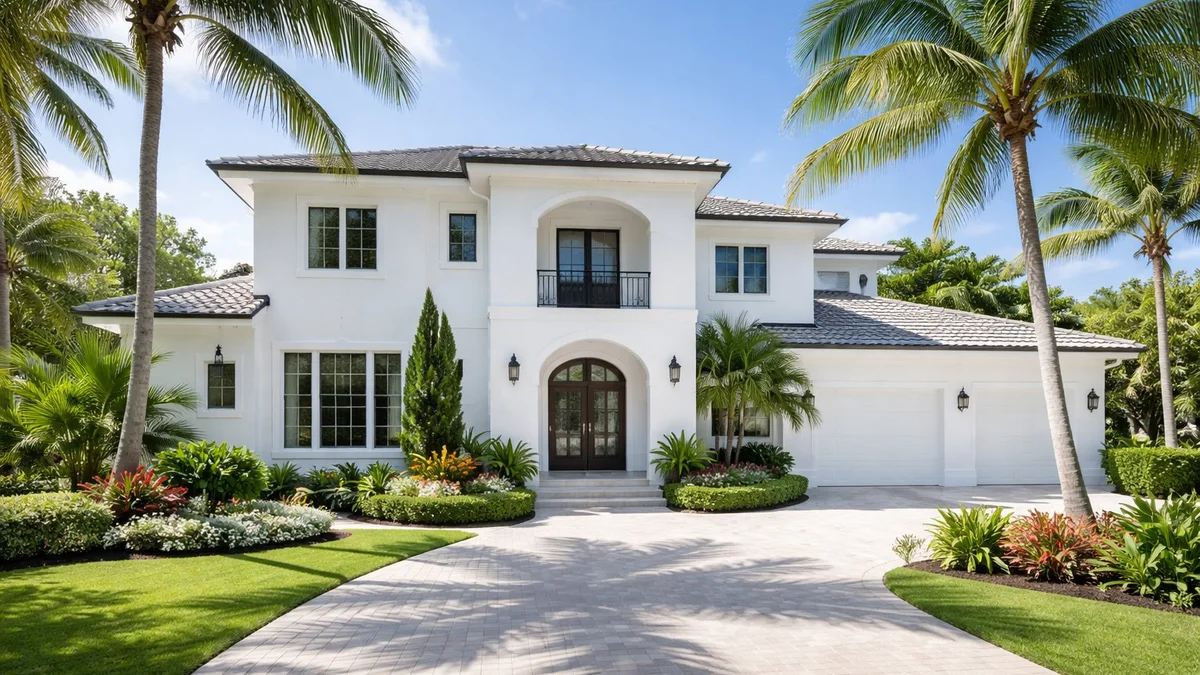
One of the most common questions we hear from homeowners in Palm Beach County is some version of this: "My house was painted a few years ago — why does it already look like it needs to be done again?" The answer almost always comes back to the same factors: the South Florida climate, the quality of the products used, and whether the prep work was done properly before a single drop of paint went on.
If you're trying to plan a paint project — or figure out whether your current exterior is due for attention — understanding what actually drives paint lifespan in this part of the country will save you time, money, and frustration.
Why South Florida is Harder on Paint Than Most Places
Most paint manufacturers give lifespan estimates based on average conditions. South Florida is not average. The combination of factors that affect paint here is more aggressive than most of the continental United States:
UV radiation. South Florida receives intense sunlight year-round. UV radiation breaks down paint film over time, causing fading, chalking, and eventually cracking. Properties with significant west-facing or south-facing walls tend to show wear faster because those surfaces get the most direct afternoon sun.
Humidity. Year-round humidity creates conditions for mold and mildew growth on exterior surfaces, particularly on shaded walls or areas with limited air circulation. Mold doesn't just look bad — it works its way into paint film and causes it to fail faster.
Salt air. Properties near the coast or the Intracoastal Waterway deal with salt air, which accelerates the deterioration of paint film and works into any cracks that develop. The closer you are to saltwater, the more aggressively your exterior needs to be maintained.
Storm season. Heavy rain and wind-driven moisture during hurricane season stress every exterior surface. If caulking around windows or doors has failed, or if there are hairline cracks in your stucco, storm rain gets in and the damage compounds quickly.
Thermal movement. South Florida's temperature swings — hot days, cooler nights, and distinct dry and wet seasons — cause stucco to expand and contract. Over time this creates hairline cracks, which become pathways for moisture if they're not addressed.
The bottom line: A paint job that lasts 10 or more years in a moderate northern climate may only last 5 to 7 years in South Florida under ideal conditions — and considerably less if prep work was skipped or lower-quality products were used.
What Actually Determines How Long Your Paint Lasts
After 25 years of painting homes across Palm Beach County, we've seen what separates paint jobs that hold up from ones that don't. It almost never comes down to the brand of paint. It comes down to these factors:
1. Surface Preparation
This is the single biggest factor. A premium paint applied over dirty, chalking, or moisture-damaged stucco will fail early regardless of how good the product is. Proper prep means pressure washing, treating any mold or mildew, repairing cracks and voids with the right caulk and patching compounds, priming bare surfaces, and ensuring everything is dry before coating. When a paint job fails prematurely, skipped prep work is usually why.
2. Product Quality and Compatibility
Not all exterior paints perform the same in Florida's climate. For stucco surfaces — which is most of South Florida's housing stock — 100% acrylic exterior coatings with built-in UV inhibitors and mildew resistance outperform cheaper alternatives significantly over time. For homes with existing cracking or older stucco, elastomeric coatings provide a flexible membrane that bridges hairline cracks as they develop with thermal movement.
The right product also depends on what's already on your walls. Applying the wrong type of coating over an incompatible existing film can cause adhesion failure. A good contractor will assess your current situation rather than just rolling the same product on every house.
3. Sun Exposure and Orientation
All sides of your home don't age the same way. West-facing and south-facing walls typically show wear faster than north-facing walls that see less direct sun. If one side of your house looks noticeably worse than the others, this is usually why — not a defect in the paint itself.
4. Proximity to the Coast
Salt air is corrosive to paint film. If your property is within a few miles of the ocean or the Intracoastal, expect your exterior to need attention more frequently than a property located further inland. Using products specifically rated for coastal environments helps, but there's no product that fully eliminates the effect of salt air — it just slows it down.
5. Ongoing Maintenance
A paint job is not a one-time fix and forget. Periodically checking caulking around windows, doors, and any wall penetrations — and recaulking when it starts to crack or separate — significantly extends the life of your exterior coating. Catching these small failures before moisture gets in is far less expensive than addressing the damage that moisture causes over time.
Signs Your Exterior Paint Needs Attention
You don't need to wait for paint to be peeling off in sheets before addressing it. Here are the signs that your exterior is ready for attention:
- Chalking: A white powdery residue on your walls when you run your hand across them. This is the paint film breaking down from UV exposure.
- Fading: Colors that have lost vibrancy, especially on sun-facing walls, indicate the UV inhibitors in the coating have been depleted.
- Hairline cracks: Small cracks in stucco are normal from thermal movement. Left unsealed, they become entry points for water.
- Peeling or bubbling: Paint separating from the surface usually indicates moisture is trapped underneath — either from inadequate prep before the last paint job or from moisture intrusion through unsealed cracks.
- Mold or mildew staining: Dark streaking or spotting on exterior walls, particularly in shaded areas. This needs to be treated before repainting, not painted over.
- Failed caulking: Cracked, shrinking, or missing caulk around window frames, door frames, and penetrations is one of the most important things to address regardless of whether you're repainting.
If you're looking at your home right now and aren't sure whether what you're seeing is a paint problem or just surface buildup, our post on whether your home needs repainting or just cleaning walks through the distinction in detail.
A Realistic Expectation for Palm Beach County Homes
With proper preparation, premium Florida-rated products, and good ongoing maintenance, a well-executed exterior paint job in Palm Beach County should give you somewhere in the range of 7 to 10 years before it needs significant attention. Homes with more sun exposure, proximity to the coast, or older stucco in need of more extensive prep may fall on the shorter end of that range.
What we consistently see is that homeowners who invest in proper prep and quality products get years more from each paint cycle than those who go with the lowest bid. In a climate like South Florida's, cutting corners on an exterior paint job is not a savings — it's an advance payment on doing it again sooner.
If you're not sure where your home stands, a free on-site assessment is the best way to get a clear answer. We'll walk your exterior, tell you what we see, and give you an honest recommendation — whether that's a full repaint now, targeted repairs to extend what you have, or something in between.