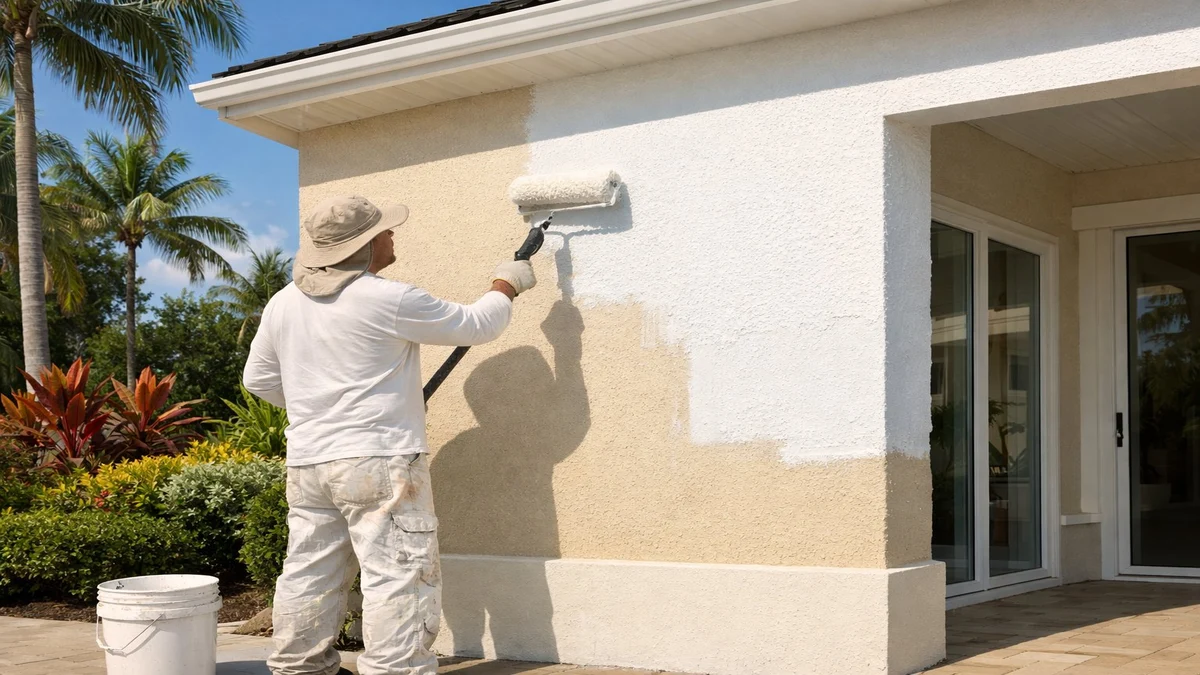
Why South Florida Is Hard on Exterior Walls
Most homes in Palm Beach County have stucco exteriors. Stucco looks great and holds up well in the right conditions, but it’s porous. Moisture works its way in — especially around windows, at the roofline, and in any area where the surface has cracked or the original coating has worn thin.
Once water gets behind the stucco, you’re dealing with mold, efflorescence, structural damage, and paint failure. What started as a maintenance issue becomes a repair job. Proper waterproofing stops that cycle before it starts.
What Waterproofing Actually Means
When most contractors talk about waterproofing exterior walls in South Florida, they’re referring to elastomeric coatings. These are thick, flexible membranes that go on like paint but perform very differently. A standard exterior paint is 3 to 4 mils thick when dry. A quality elastomeric coating is 10 to 15 mils or more.
That thickness matters. Elastomeric coatings bridge hairline cracks, flex with the wall through heat cycles without cracking, and create a continuous waterproof barrier across the entire surface. When applied correctly over properly prepared stucco or masonry, they can keep water out for 5 to 10 years.
Important distinction: Not every exterior paint job is a waterproofing job. Standard acrylic paint provides some moisture resistance but does not perform like an elastomeric membrane. If waterproofing is the goal, the product and application spec matter significantly.
Signs Your Home Needs Waterproofing
You don’t need to wait for visible water damage to act. Watch for these signs that your exterior coating has worn out or failed:
- Paint that’s peeling, bubbling, or chalking heavily
- White mineral deposits (efflorescence) on the stucco surface
- Hairline cracks forming around windows, doors, or at corners
- Staining or discoloration that reappears after cleaning
- Interior walls that feel damp near exterior surfaces after rain
Any of these means moisture is either getting in or about to. Getting ahead of it with a waterproof recoat is significantly less expensive than dealing with remediation later.
Waterproofing for Residential Homes
For single-family homes, waterproofing typically means a full elastomeric recoat of all exterior stucco surfaces, with particular attention to penetrations, trim lines, and any areas where cracking has started. We start with a thorough pressure wash, then address any cracks or damage with compatible patching materials before the coating goes on.
The result is a refreshed exterior that looks like a fresh paint job and performs like a waterproof membrane. Most homeowners combine waterproofing with a color change so they’re getting both protection and a new look in one project. For context on what exterior work typically costs in this area, see our guide on exterior painting costs in Palm Beach County.
Waterproofing for Commercial Buildings
Commercial properties have more at stake. A multi-tenant building, HOA, condo complex, or commercial facility with water intrusion issues isn’t just a maintenance problem — it’s a liability. Water damage affects tenants, triggers insurance claims, and can escalate quickly in a building with shared walls and mechanical systems.
Jacobs & Gallucci works with property managers, HOAs, and building owners across Palm Beach County on commercial waterproofing projects. We handle large surface areas, work around tenant schedules, and deliver consistent results across the full building envelope. Our commercial waterproofing work covers exterior walls, parapets, concrete block, and masonry surfaces. See more about our commercial painting and coating services.
The Right Time to Waterproof in South Florida
South Florida’s wet season runs June through October. The best time to waterproof is during the dry season — November through May — when you have extended windows of low humidity and dry weather for proper application and curing. April through early June is ideal, and that’s exactly when most of our waterproofing projects run.
If you’ve been putting off a waterproofing project, now is the time to schedule it. Once the rains start, your window closes fast.
What to Expect from a Waterproofing Project
A typical residential waterproofing project with Jacobs & Gallucci runs two to three days depending on the size of the home. The process looks like this:
- Day 1: Pressure washing, crack repair, caulking around windows and penetrations
- Day 2: First coat of elastomeric coating, full surface coverage
- Day 3: Second coat, trim work, cleanup, and final inspection
We use premium elastomeric products rated for Florida’s climate. Everything is applied to manufacturer spec for thickness and coverage. We don’t cut corners on film build — that’s where the protection comes from.
If your project also involves drywall damage from previous water intrusion, that work gets addressed before painting begins. See our post on drywall repair in South Florida for what that process involves. And if you’re also considering a full exterior repaint alongside your waterproofing project, our post on how long exterior paint lasts in South Florida covers what drives longevity in this climate.
Related Reading
If moisture damage has already affected your walls or ceilings, our drywall repair in Boca Raton service page and our Drywall Repair Boca Raton guide explain how surface repairs fit into a full prep and painting plan.