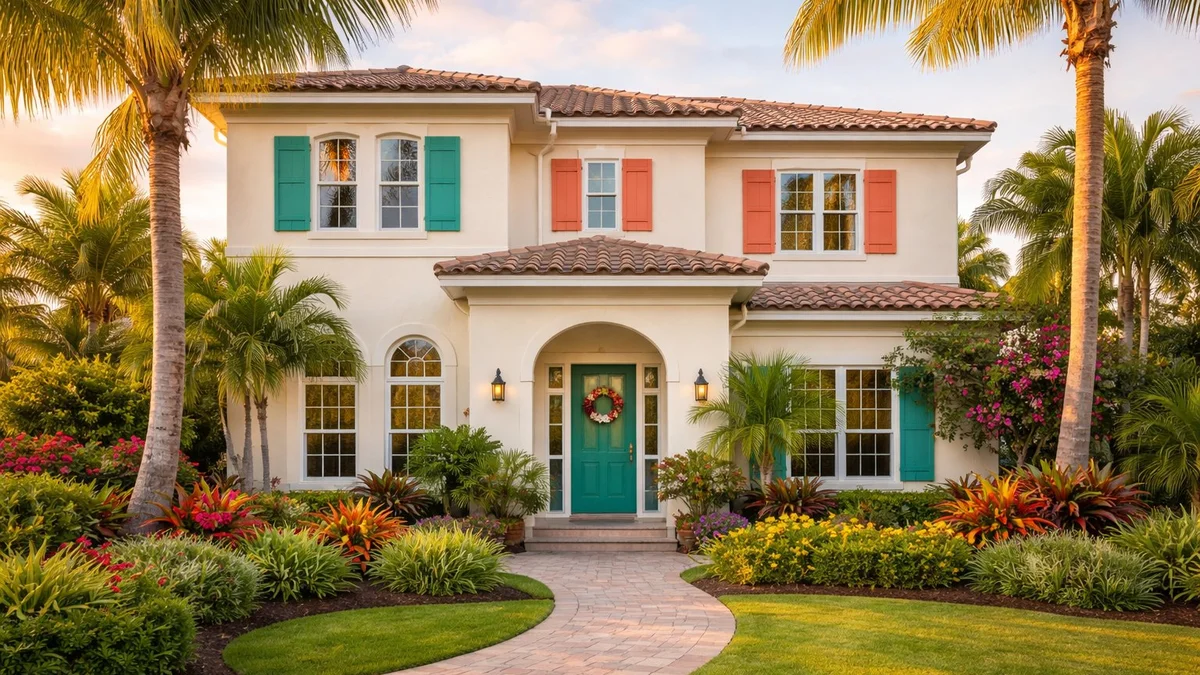
Choosing an exterior paint color for your South Florida home is one of those decisions that seems simple until you're standing in front of a paint deck trying to picture how a color will look on your actual house in actual Florida sunlight. What looks perfect on a screen or a paint chip often looks completely different once it's on a stucco wall in direct afternoon sun — and what works beautifully in the Pacific Northwest or the Northeast can look flat or washed out here.
After 25 years of painting homes across Palm Beach County, we've seen what works and what doesn't in this specific environment. Here's what's worth thinking through before you commit to a color.
Understand How South Florida Light Changes Color
This is the most important thing most homeowners don't think about. South Florida's sunlight is intense and direct for most of the year, and it affects how colors read on exterior surfaces in significant ways.
Colors that appear warm and inviting in moderate light can look harsh or washed out under intense Florida sun. Darker colors absorb more heat, which accelerates paint breakdown and can increase your cooling costs. Bright whites can be almost blinding at midday. The colors that tend to look most intentional and age most gracefully here are in the mid-range — warm neutrals, soft earth tones, muted coastal palettes — rather than the extremes of very dark or very bright.
The direction your home faces also matters. South- and west-facing walls receive the most direct sun and will show fading faster than north- or east-facing walls. A color that looks balanced on all sides in the early months may look uneven a few years in if you haven't accounted for sun exposure.
Work With the Architecture, Not Against It
Most Palm Beach County homes are stucco construction — CBS (concrete block and stucco) is the predominant building type in the area. Stucco has its own texture and depth that interacts with color differently than wood siding or painted brick. Colors read slightly differently on stucco than on smooth surfaces, and the texture itself catches light in ways that can shift how a color appears at different times of day.
Mediterranean and Spanish-influenced architecture — common throughout Boca Raton, Delray Beach, and Wellington — tends to look most natural in warm earth tones: terracotta-adjacent palettes, warm whites and creams, soft ochres, and the muted greens and blues that echo the regional landscape. More contemporary homes have more flexibility, but even modern architecture in this climate typically benefits from colors that feel connected to the environment rather than fighting against it.
Consider the Fixed Elements
Your paint color doesn't exist in isolation. Before settling on a body color, take stock of everything that isn't changing: your roof color, your driveway material, any brick or stone accents, your front door, your shutters, and your landscaping. These fixed elements define the palette you're working within, and the best exterior color schemes feel cohesive with all of them rather than picking one element and ignoring the rest.
Think About the Trim and Accent Colors Too
Exterior painting is almost never just one color. The relationship between your body color, trim color, and accent colors (shutters, doors, garage door) determines how the overall exterior reads. Some combinations that work well in this area:
- Warm white or cream body with bright white trim reads as clean and classic — it suits Mediterranean, traditional, and transitional architecture well and holds up well in UV.
- Warm greige or soft tan body with white or warm white trim is one of the most versatile combinations in South Florida and works across a wide range of architectural styles.
- Soft coastal tones — muted blues, sage greens, soft grays — with white trim have become increasingly popular, particularly in areas closer to the water. They work best when the surrounding landscape supports them.
- Darker accent colors on shutters and front doors add contrast and definition, but choose colors that will hold up in UV — some deep colors fade more noticeably than others.
HOA Guidelines and Community Standards
If your home is in an HOA community — which covers a significant portion of Palm Beach County — your color choices may be subject to approval. Many communities maintain an approved color palette, and some require a formal approval process before exterior painting begins. It's worth reviewing your HOA documents and, if required, getting color approval before you schedule your paint job. We've seen homeowners have to repaint because they skipped this step.
Test Before You Commit
Paint chips and online visualizers are useful starting points, but they're not substitutes for seeing a color on your actual home in your actual light conditions. Before committing to a color for the entire exterior, consider getting sample quarts and painting test patches in a few locations — ideally on different elevations and exposures. Look at them at different times of day and in different weather conditions. What looks right in morning light may look different at midday or in overcast conditions.
A practical tip: Paint your test patches as large squares — at least two feet by two feet — rather than small swatches. Small patches don't give you an accurate read of how a color will look at scale. And always look at your test patches against both your roof and your trim, not just the wall itself.
UV Fading and Color Longevity
Color choice also affects how your paint holds up over time. Deeply saturated colors — particularly reds, blues, and greens — tend to fade more visibly under prolonged UV exposure than neutrals and lighter tones. This doesn't mean you can't use them, but it's worth factoring into your decision. If you love a bold color, using a premium exterior coating with strong UV inhibitors and choosing a color in a slightly deeper value than you think you want (so there's room for it to fade toward your target) can help extend how long it looks intentional.
Your contractor should be able to advise on which products have the best UV resistance for the colors you're considering. This is one area where product quality genuinely matters. For a deeper look at how climate factors affect paint longevity here, see our post on exterior paint lifespan in South Florida.
Before you commit to a color, it's also worth making sure the surface is actually ready for paint. Our post on whether your home needs repainting or just cleaning covers the signs that indicate your exterior needs attention versus just a wash. And when you're ready to think about budget, our guide on exterior painting cost in Palm Beach County explains what goes into an honest estimate.
When in Doubt, Ask
If you're uncertain about color direction, we're happy to walk through it with you when we come out for your estimate. We're not interior designers, but after painting hundreds of homes across Palm Beach County we have a clear sense of what works in this environment and what tends to look off — and we'll give you an honest opinion if you ask for one.
The goal is a color you're happy with for the long term, not just something that looked good on a chip. Taking the time to get it right before the paint goes on is always easier than dealing with regret after.