What Makes Interior Painting in Boca Raton Different
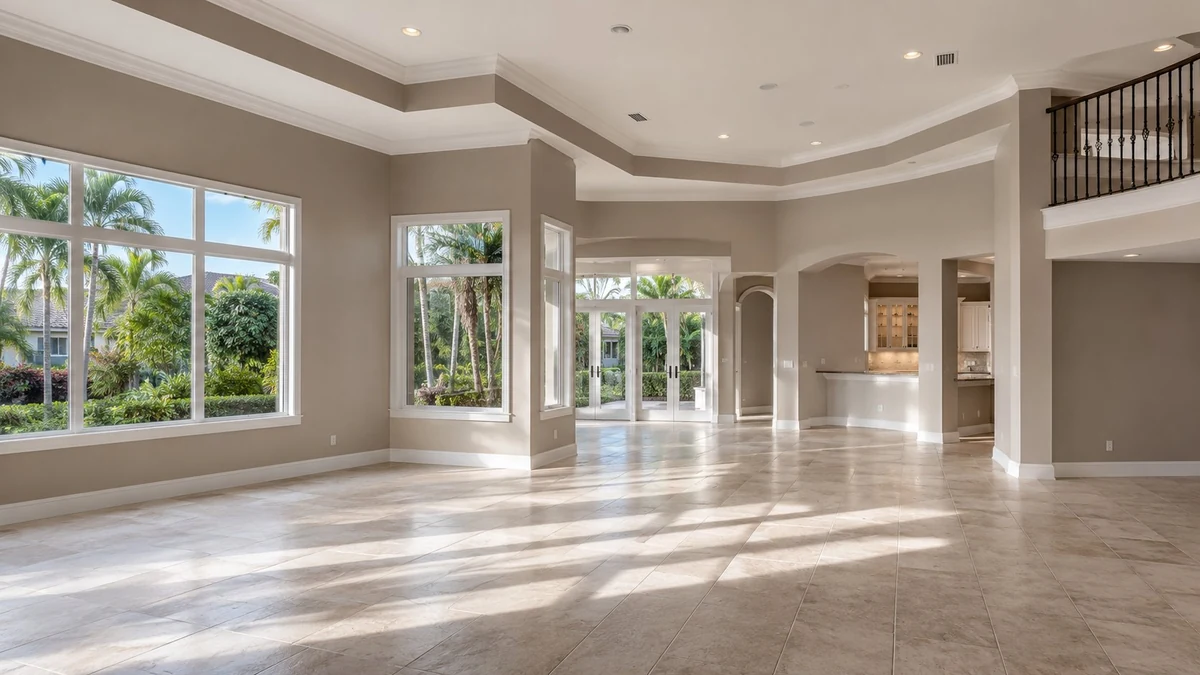
Most Boca Raton homes are not simple boxes with flat ceilings and standard trim. The typical Boca home has some combination of volume ceilings, tray or coffered ceiling details, crown molding, arched doorways, niches, and open floor plans where the living area, kitchen, and dining room share one continuous space. These features are what make Boca homes attractive, and they are also what make them harder to paint well.
Volume ceilings mean ladders, scaffolding, or extension poles to reach surfaces safely. Tray ceilings require careful cutting in at the transitions where wall color meets ceiling color. Crown molding adds linear feet of detailed trim work that needs to be cut clean without bleeding onto adjacent surfaces. Arched doorways require steady hands and careful masking. Open floor plans mean large unbroken wall expanses where any inconsistency in coverage, sheen, or color is immediately visible.
A crew that paints apartment turnovers or basic tract homes efficiently will struggle with the precision work a typical Boca Raton interior demands. The scope is different, the skill level required is different, and the time it takes is different.
Prep Is Where the Quality Shows
On every interior paint job, prep is the difference between a result that looks good on day one and a result that still looks good in five years. In Boca Raton homes, the prep requirements are often more involved due to the age and condition of the walls.
Drywall repair. Nail pops, hairline cracks, screw pops, and water stains are common in South Florida homes due to settling, humidity cycling, and the occasional roof leak. Every imperfection needs to be spackled, sanded, and primed before paint goes on. Painting over a nail pop without addressing it means the pop reappears within weeks. Our drywall repair in Boca Raton guide covers the full scope of what repair involves.
Cleaning and degreasing. Kitchen walls accumulate grease film. Bathroom walls collect moisture residue. Any wall near an exterior door picks up dust and humidity. Paint does not adhere properly to dirty surfaces. A professional crew wipes down walls before priming and painting.
Caulking. Every gap between trim and wall, crown molding and ceiling, baseboard and floor needs to be caulked with a paintable caulk. These gaps open over time due to settling and humidity, and they are some of the most visible imperfections after a paint job. Caulking them before painting creates clean, tight lines that look finished.
Priming. New drywall patches, stained areas, and surfaces with significant color changes all require primer. Skipping primer on a dark-to-light color change means three or four coats of finish paint instead of two, which costs more in material and labor than priming once and painting twice.
Protection. Floors, countertops, fixtures, cabinets, and furniture all need to be covered. A professional crew uses canvas drop cloths on floors (not plastic, which is slippery and tears), tapes off fixtures and trim edges, and moves furniture to the center of each room under protective covering. On a Boca Raton home with tile floors, the protection setup matters because paint on tile is difficult to remove without damaging the grout.
Choosing the Right Products
Interior paint selection involves two decisions: the product quality and the sheen level. Both matter.
Product quality. Premium interior paints from Benjamin Moore, Sherwin-Williams, or equivalent manufacturers offer better coverage, smoother application, superior washability, and longer-lasting color than builder-grade products. The price difference per gallon is $15-25, but on a whole-home interior the total material cost difference between premium and builder-grade is a few hundred dollars. On a project that costs several thousand in labor, using cheap paint to save $200 is the wrong tradeoff.
Sheen levels. Flat or matte finishes hide imperfections but are harder to clean. Eggshell is the most common choice for walls in living areas and bedrooms. Satin works better in kitchens, bathrooms, and high-traffic hallways because it resists moisture and wipes clean. Semi-gloss is standard for trim, doors, and baseboards. High gloss is a specialty finish used on ceilings, accent walls, and trim for a dramatic reflective look. Our post on high gloss painting in Boca Raton covers when that option makes sense and what preparation it requires.
Low-VOC and zero-VOC. In an occupied home, low-VOC or zero-VOC products reduce odor and fumes during and after the project. Most premium paints now come in low-VOC formulations without sacrificing performance. If anyone in the home has respiratory sensitivities, zero-VOC is worth specifying.
What the Process Looks Like
A typical Boca Raton whole-home interior follows a room-by-room sequence. The crew does not paint every room simultaneously. They prep a room, paint it, let it dry, apply a second coat, then move to the next room. This minimizes disruption because most of the home remains usable throughout the project.
On a standard 3-bedroom home with normal ceiling heights, expect 3 to 5 days. A larger home with volume ceilings, tray details, and extensive trim work may take a full week or more. The timeline should be discussed during the estimate so there are no surprises.
During the project, the crew should be cleaning up at the end of each day. Drop cloths stay down in active work areas, but completed rooms should be put back together before the crew leaves. A professional crew treats an occupied home with respect because they understand you are living in the space while the work happens.
What to Look For in a Boca Raton Interior Painter
- Fully insured. General liability and workers compensation. Interior work involves ladders, chemicals, and equipment in your home. Insurance protects you if something goes wrong.
- Detail work capability. Ask specifically about crown molding, tray ceilings, and trim. Show photos of your home during the estimate walk-through so the contractor sees the level of detail involved.
- In-person estimates. Any interior quote that comes from a phone call or photos is unreliable. Wall condition, ceiling height, trim complexity, and prep scope can only be assessed in person.
- References from similar homes. A crew that paints Boca Raton interiors regularly will have references from similar homes. Ask for them.
- Owner involvement. A company where the owners estimate and oversee the work delivers different accountability than one that sends a salesperson and a subcontracted crew.
For a broader look at what interior painting costs in this market, see our post on what interior painting costs in Palm Beach County. For more about our interior painting services in Boca Raton specifically, visit the interior painting in Boca Raton service page.