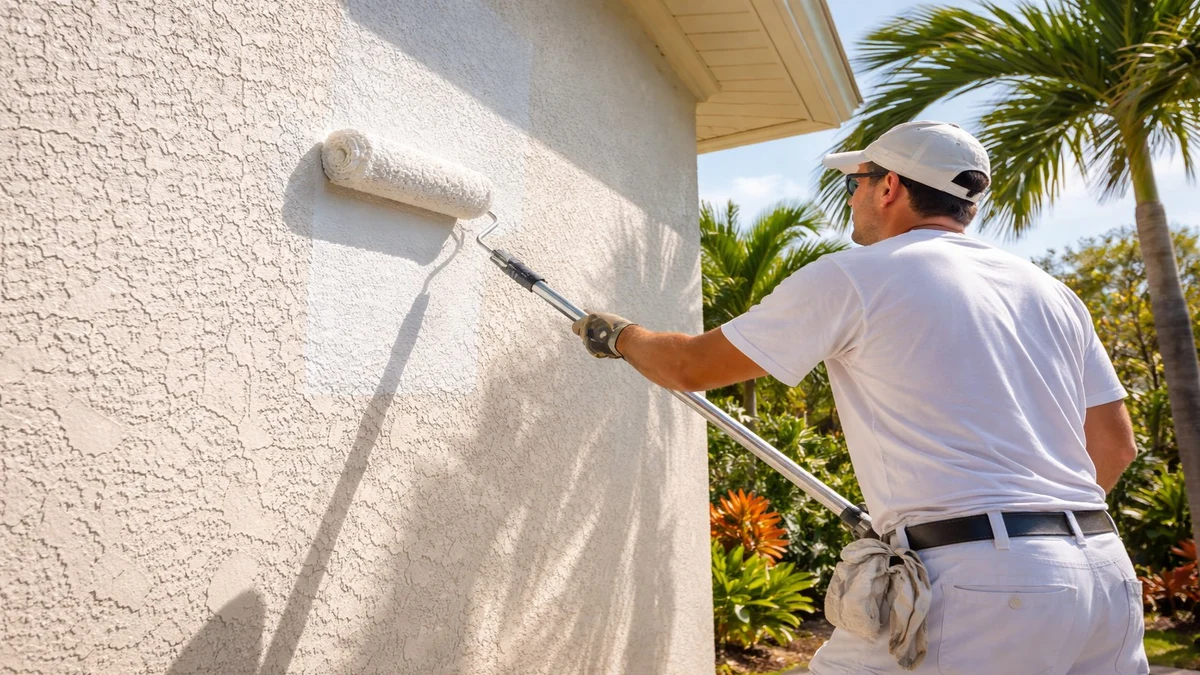
Why Stucco Is Different from Other Exterior Surfaces
Stucco is a cementitious material — it’s applied wet and hardens into a textured, porous surface. That porosity is what makes stucco both durable and demanding. It expands and contracts with temperature changes, absorbs moisture, and develops hairline cracks over time as the structure settles. None of that is a problem if the surface is properly coated and maintained. All of it becomes a problem if it’s not.
Painting stucco isn’t the same as painting wood siding or fiber cement. The surface is uneven, the porosity affects how paint adheres and cures, and the cracks that develop require specific materials to address before any finish coat goes on. A contractor who doesn’t understand stucco will either skip the prep or use the wrong products — and you’ll see the results within a year or two.
The Most Common Stucco Painting Mistakes
After painting stucco exteriors across Palm Beach County for over 25 years, the failures we see almost always trace back to one of these:
- Skipping the pressure wash. Stucco holds dirt, mold, mildew, and chalking paint in its texture. Painting over any of that guarantees adhesion failure. A thorough pressure wash is non-negotiable before any other step.
- Not addressing cracks before painting. Hairline cracks filled with paint look fine for about six months. Then moisture gets in, freezes and expands (even in Florida, temperature swings matter), and the crack opens wider. Cracks need to be filled with the right flexible caulk or patching compound before priming.
- Using the wrong roller nap. Stucco texture requires a thick nap roller — typically 3/4 inch or more — to get paint into the recesses of the surface. A thin nap roller leaves the texture peaks coated and the valleys bare. It looks fine at first and fails unevenly.
- Applying paint in full sun on hot surfaces. In South Florida’s heat, paint applied to a surface over 90 degrees dries too fast, doesn’t bond properly, and can blister. We schedule stucco work for early morning and follow the shade around the building.
- One coat on bare or raw stucco. Bare stucco is highly porous and will absorb a single coat of paint unevenly. Two coats minimum, with the right primer underneath, is the standard for any quality stucco paint job.
What the Right Prep Process Looks Like
On a properly run stucco paint job, the first day is almost entirely preparation. Here’s what that looks like:
- Pressure washing the full exterior to remove dirt, mold, chalking, and loose paint
- Inspecting the surface for cracks, failed caulk around windows and penetrations, and any areas where the stucco has delaminated or been damaged
- Filling cracks with a flexible, paintable caulk or patching compound matched to the existing texture
- Re-caulking all window and door frames, utility penetrations, and trim lines
- Priming any bare stucco, repairs, or areas where the existing paint has failed
- Masking windows, trim, and landscaping before finish coats begin
If a contractor shows up and goes straight to painting, that’s a red flag. The prep is where the job is won or lost.
On product selection: For most Palm Beach County stucco homes, we use 100% acrylic exterior coatings with high UV resistance and mildew inhibitors. For homes with cracking history or moisture intrusion, elastomeric coatings are the better choice — they’re significantly thicker, more flexible, and create a waterproof membrane over the stucco surface. See our post on waterproofing in South Florida for more on elastomeric coatings.
How Long a Stucco Paint Job Should Last
With proper preparation and premium coatings, a stucco exterior in Palm Beach County should hold up 7 to 10 years before needing a full repaint. That number drops significantly with shortcuts. A job done without crack repair, without priming, or with builder-grade paint may start showing problems in three to four years.
The factors that shorten stucco paint life in South Florida:
- West-facing walls with direct afternoon sun exposure
- Proximity to salt air on or near the Intracoastal or ocean
- Older stucco with a history of moisture intrusion
- Dense tree cover that keeps walls damp and promotes mildew
- Skipped or insufficient prep on the previous paint job
For a deeper look at what drives paint lifespan specifically, see our post on how long exterior paint lasts in South Florida.
Stucco Color Selection in Palm Beach County
Stucco holds color differently than smooth surfaces. The texture creates shadow and depth that affects how a color reads on the wall versus how it looks on a chip. Light colors read slightly lighter on stucco than on smooth surfaces. Dark colors absorb significantly more heat, which can accelerate paint breakdown on south and west-facing elevations.
In Palm Beach County, light neutrals — warm whites, soft tans, light grays — are the most practical choice. They reflect heat, hide the inevitable chalking that comes with UV exposure, and hold up better between paint cycles. HOA communities typically have an approved palette that narrows the decision. If you’re outside an HOA, our post on choosing exterior paint colors for a South Florida home covers what works in this climate.
Commercial Stucco Painting
Commercial buildings in Palm Beach County — office parks, retail centers, HOA common areas, and multi-unit residential properties — are almost universally stucco. The same principles apply, but at scale. A commercial stucco repaint requires more planning, more coordination with tenants and property managers, and products selected for durability over large surface areas with minimal disruption to operations.
Jacobs & Gallucci handles commercial stucco repaints throughout Palm Beach County. We assess the full building envelope, phase the work to minimize disruption, and use coatings rated for commercial applications. See our commercial painting services for more detail.