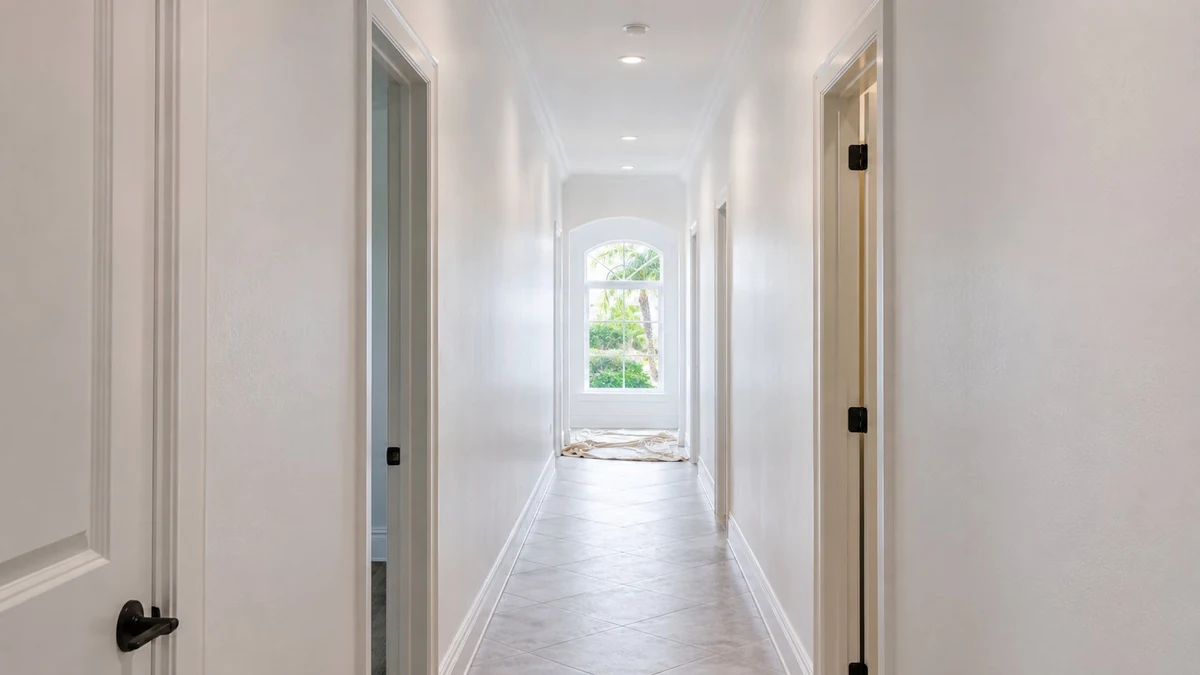
Color Selection in South Florida Light
Palm Beach County homes get intense natural light through large windows, sliding glass doors, and open floor plans designed to bring the outdoors in. This light affects how paint colors look on the wall in ways that surprises many homeowners.
Colors that look warm and inviting on a sample chip under store lighting can appear washed out or overly bright on a south-facing wall flooded with afternoon sun. Conversely, colors chosen for a north-facing room may look darker and cooler than expected once applied.
The best approach is to test. Buy sample quarts and paint large swatches on the actual walls, ideally two to three feet square. Look at them at different times of day. A color that works at 10 AM may look completely different at 3 PM when the sun angle changes. Professional painters expect this process and can help guide color decisions based on experience with how specific colors perform in South Florida light.
For exterior color guidance, see our post on choosing exterior paint colors for South Florida homes. The light considerations are different for interiors but the principle of testing on the actual surface is the same.
Product Selection for Palm Beach County Interiors
South Florida's humidity is the primary factor in interior product selection. The air inside a Palm Beach County home carries more moisture than homes in drier climates, even with air conditioning running. This moisture affects how paint cures and how it performs over time.
Premium latex paints from manufacturers like Benjamin Moore, Sherwin-Williams, or equivalent are the standard for Palm Beach County interiors. They cure harder, resist moisture better, and clean easier than builder-grade products. The cost difference per gallon is modest compared to the labor cost of the project.
Low-VOC and zero-VOC formulations are worth specifying for any occupied home. They reduce odor during and after the project, which matters when you are living in the space. Most premium paints now come in low-VOC versions without performance tradeoffs.
Sheen selection depends on the room. Flat or matte finishes hide surface imperfections but show scuffs and are harder to clean. Eggshell is the most popular choice for living areas and bedrooms because it balances a soft appearance with reasonable washability. Satin is better for kitchens, bathrooms, laundry rooms, and high-traffic hallways. Semi-gloss goes on trim, baseboards, and doors. High gloss is a specialty finish for ceilings and accent walls. See our high gloss painting guide for more on that option.
Living in Your Home During the Project
Most interior painting in Palm Beach County happens in occupied homes. Families do not move out for a paint job. This means the crew needs to work room by room, minimizing disruption while maintaining quality.
A professional crew preps and paints one room or section at a time. Furniture is moved to the center and covered. Floors are protected with canvas drop cloths. The crew completes the room, puts it back together, and moves to the next one. At the end of each day, the active work area is cleaned up and the rest of the home is usable.
Expect some disruption. Paint has odor, even low-VOC products. Rooms under active work are not usable. Hallways may have drop cloths. But a crew experienced with occupied homes manages these issues without turning the project into a hardship.
Timeline: A typical 3-bedroom Palm Beach County home takes 3 to 5 days for a full interior repaint including prep. Larger homes or homes with extensive drywall repair, high ceilings, or specialty finishes may take longer. The timeline should be discussed and agreed upon during the estimate, not discovered on day one.
What Drives Interior Painting Costs
The price of interior painting varies significantly based on factors that are specific to each home. Understanding what drives the cost helps you evaluate estimates accurately.
Room count and square footage are the baseline. More rooms means more walls, more cutting in, more trim work, and more days of labor.
Ceiling height changes the equation substantially. Standard 8-foot ceilings are straightforward. The 10-foot, 12-foot, and volume ceilings common in Palm Beach County homes require different equipment, more paint per wall, and more time per room.
Drywall condition determines how much prep is needed. A home with minimal nail pops and no cracks takes less time than one with extensive repair needs. See our drywall repair guide for what to look for.
Trim complexity adds time. Crown molding, chair rails, wainscoting, and detailed door casings all require careful brush work that takes longer than rolling walls.
Color changes matter. Repainting the same color or a similar shade requires fewer coats than going from dark to light, which typically needs primer plus two finish coats.
For detailed cost information, see our interior painting cost guide for Palm Beach County. For our full interior painting service overview, visit the interior painting service page.